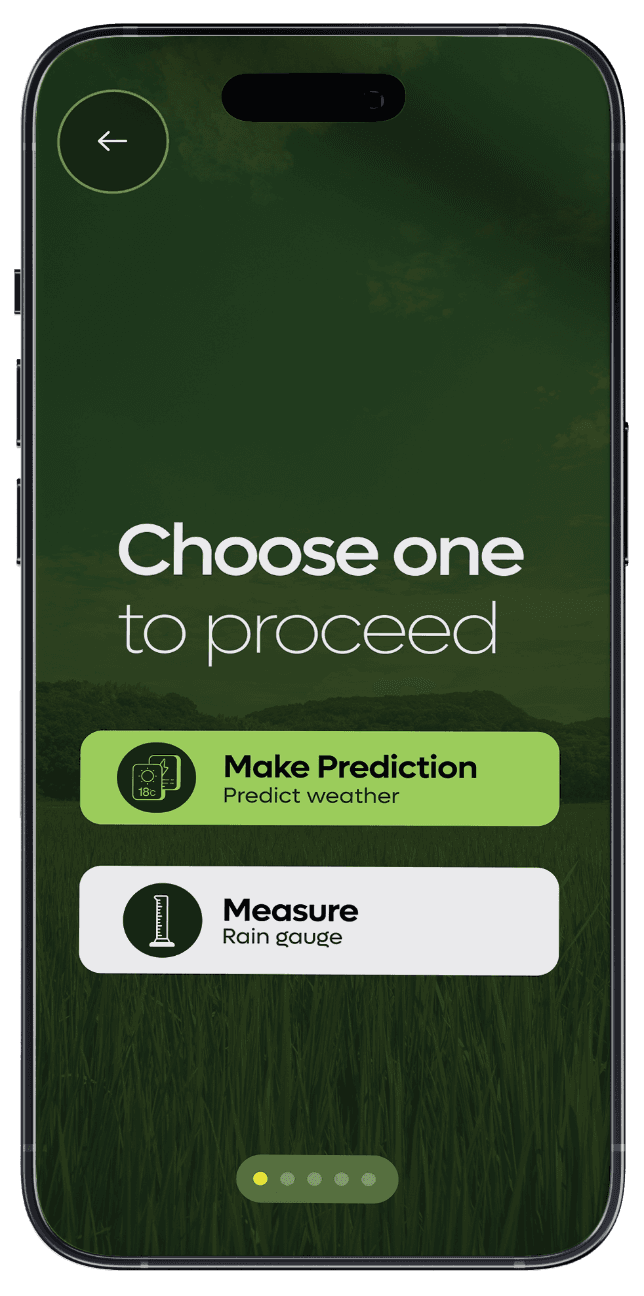
Smart Indigenous Weather App
Climate-smart weather forecasting that combines traditional ecological knowledge with AI to help Ghanaian farmers thrive
Trusted by 100+ farmers
•Powered by indigenous knowledge
Unpredictable weather patterns devastate smallholder farmers, threatening food security for over 5,000 people.
SIWA changes this reality by uniting two powerful knowledge systems: the time-tested wisdom of indigenous ecological indicators and the precision of modern AI technology.
The result? Farmers gain reliable, localized forecasts that turn uncertainty into opportunity, enabling smarter decisions that protect livelihoods and increase yields.
SIWA is bridging indigenous wisdom and modern technology to transform smallholder farming across Ghana's Pra River Basin
Female farmers are at the forefront of our data collection efforts, using calibrated rain gauges to record accurate rainfall measurements. This hands-on involvement empowers women to become climate data experts in their communities, bridging the gap where they produce 70% of food but historically owned only 8% of agricultural resources.
Installing community-managed rain gauges across 14 communities in the Pra River Basin creates a hyperlocal weather monitoring network. These simple yet precise instruments enable farmers to validate indigenous forecasts with scientific data, forming the foundation of SIWA's AI learning system while ensuring climate information is generated by and for the community.
Our co-production approach brings farmers, researchers, and agricultural officers together in collaborative workshops. Women and youth actively shape SIWA's features, ensuring the app reflects their real needs, from planting alerts to water management guidance. These sessions transform passive recipients into active innovators, documenting indigenous ecological indicators while building digital literacy and confidence.
Cocoa farming, which accounts for 70% of family income in the Pra River Basin, is highly vulnerable to rainfall variability. SIWA equips cocoa farmers with precise seasonal onset predictions and daily weather forecasts, helping them time critical activities like pod harvesting and fermentation. By combining their observations of Ceiba trees, moon phases, and animal behaviors with AI-enhanced forecasts, farmers reduce losses from unexpected weather.
Hands-on training sessions teach farmers to use SIWA's icon-driven interface, logging indigenous weather indicators like cloud patterns, frog croaking, and bamboo sounds alongside actual rainfall readings. These workshops bridge generational knowledge gaps—elders share forecasting wisdom validated through centuries of practice, while youth gain digital skills. With trainings in local languages and accessible designs, even farmers with limited literacy become confident app users.
Real impact from communities across Ashanti, Eastern, and Central regions

Women produce 70% of Ghana's food. They should also shape its climate tools.
ObaaSIWA is SIWA's dedicated gender initiative, recognising women farmers not as passive recipients, but as co-designers, data stewards, and community leaders of a climate-resilient future.
Our goal is to close the gender gap in climate adaptation.
Designed specifically for smallholder farmers with limited connectivity and diverse literacy levels
SIWA functions fully without internet, critical for rural areas with limited connectivity. Record observations, submit predictions, and log rainfall anytime. Data syncs automatically when connection is available.
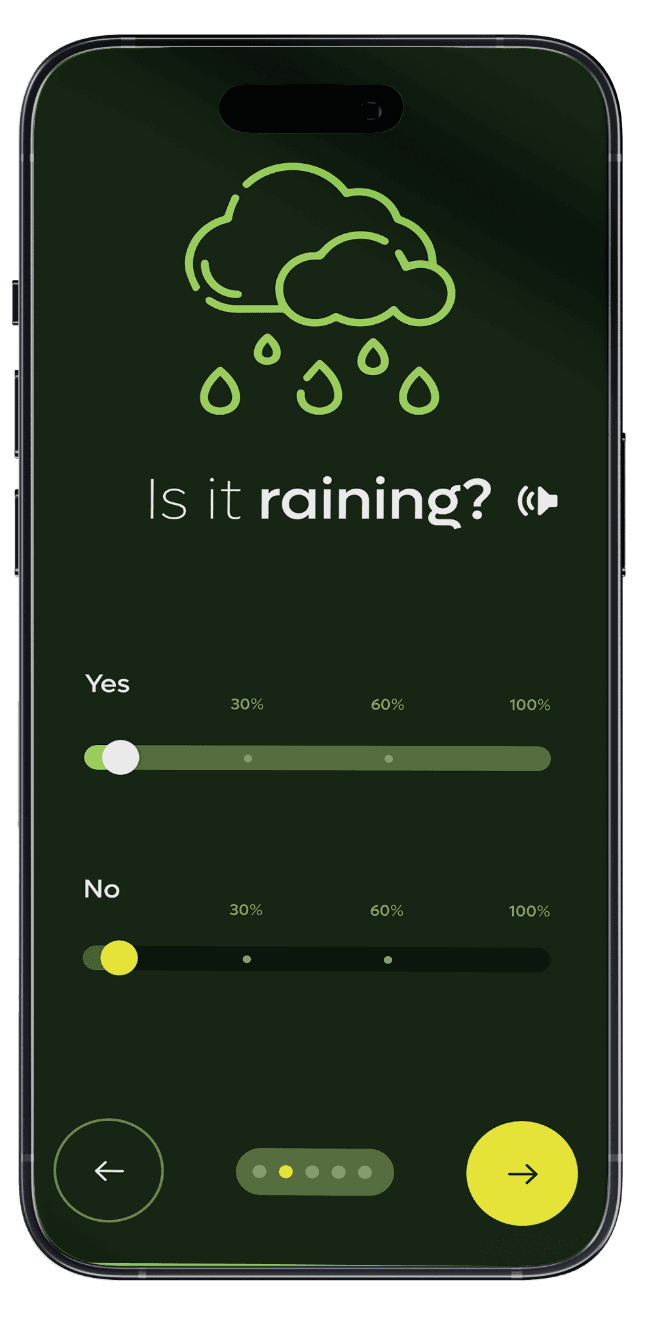
Visual design accessible to all literacy levels. No reading or typing; just tap icons for clouds, moon, animals, and plants. Audio support available in Twi.
Machine learning trained on validated data from expert forecasters across 14 communities. Integrates winning solutions from Indigenous Intel AI Challenge with real-time Ghana Meteorological Agency data.
SIWA (Smart Indigenous Weather App) is a mobile application that bridges traditional weather forecasting knowledge with modern AI technology. Developed by DIPPER Lab, SIWA empowers smallholder farmers in the Pra River Basin with accurate, localized weather predictions by combining validated indigenous ecological indicators with scientific data.
SIWA is designed for smallholder farmers in Ghana, particularly in the Pra River Basin covering Ashanti, Eastern, and Central regions. The app is accessible to users with varying literacy levels through its icon-driven interface. We currently work with 100+ farmers across 14 communities and are expanding to reach more farming households.
Yes! SIWA functions completely offline for daily use—critical for rural areas with limited connectivity. Farmers can record observations, submit predictions, and log rainfall data anytime. All data automatically syncs when internet connection becomes available, ensuring no information is lost.
SIWA uses visual icons to be accessible across literacy levels and languages, requiring no reading or typing. We're developing user manuals and audio support in local languages including Twi, Fante, and English to ensure all farmers can use the app effectively regardless of their literacy level.
SIWA is currently free for farmers participating in our partner communities across the Pra River Basin. We're working on sustainable funding models through partnerships with Ghana Meteorological Agency, agricultural extension services, and development organizations to ensure continued free access as we scale to more regions.
Indigenous knowledge is documented only with prior permission, proper attribution, and cultural sensitivity. All personal data is anonymized where possible, stored securely, and used only for agreed purposes in compliance with national data protection laws. Communities retain ownership of their local knowledge. All participants provide informed consent and can withdraw at any time.
Absolutely! We're committed to at least 50% women participation in all project activities, including training and leadership roles. We provide targeted smartphone and digital literacy training, safe and accessible venues, and times that accommodate caregiving responsibilities. Women serve as data collectors, trainers, and decision-makers in the SIWA project, addressing the gap where women produce 70% of food crops but historically owned only 8% of agricultural land.
SIWA tracks validated indigenous ecological indicators including moon phases, cloud patterns, celestial signs (stars, rainbow), animal behaviors (cattle birds, frogs, termites, ants), plant responses (Ceiba trees, bamboo, water taro, Emire and Odum trees), and atmospheric conditions (wind direction, dew, heat, thunder). Our research with 25 indigenous forecasters across 14 communities documented these indicators and their correlation with actual weather outcomes.
SIWA uniquely combines validated indigenous ecological indicators with scientific weather data and AI-powered predictions. It's co-produced with farmers to meet their specific needs, works completely offline for rural areas, and uses an local language interface accessible to all literacy levels. Unlike generic weather apps, SIWA is built specifically for smallholder farmers in rainfed agriculture.
Yes! SIWA is designed for scalability. After successful implementation in the Pra River Basin (Obuasi East, Atiwa West, and Assin Foso districts), we plan to expand across Ghana and adapt the model for other climate-vulnerable regions in West Africa. Our partnerships with universities and meteorological agencies position us to replicate this indigenous knowledge-science integration approach in diverse agricultural contexts.



Send Us a Quick Message